Editor’s Note
This essay is published in Concinnitas Journal with the exclusive authorization of David Yuminaga, a scholar whose research engages closely with film culture and its entanglement with modern social formations.
In this study of Cuowei (1986), David situates Huang Jianxin’s work within the broader transformations of reform-era China, examining how bureaucratic rationality, technocratic ascent, and the mechanization of social roles intersect within cinematic form. The analysis moves beyond science fiction as a genre, reading the film as a meditation on institutional restructuring and the reconfiguration of the social self.
David has described himself, with characteristic reserve, as:
“A wanderer in the North. He lived in Tokyo for several years and now resides in Edmonton. He watches the sun rise and fall, over this kingdom of ice and snow.”
The geographical trajectory gestures toward a sustained attentiveness to cultural transition and historical change—an attentiveness that informs the present essay. His contribution aligns closely with Concinnitas’ commitment to rigorous, historically grounded inquiry into the cultural expressions of modernity.
We are pleased to present this work as part of our continuing exploration of cinema, technology, and social transformation.
Due to its length, this essay is published in two parts.
— Concinnitas Journal
Dislocation in the 1980s China:
Socialist Bureaucracy, Doubles, and Changing Sociality in Cuowei (1986)
Introduction
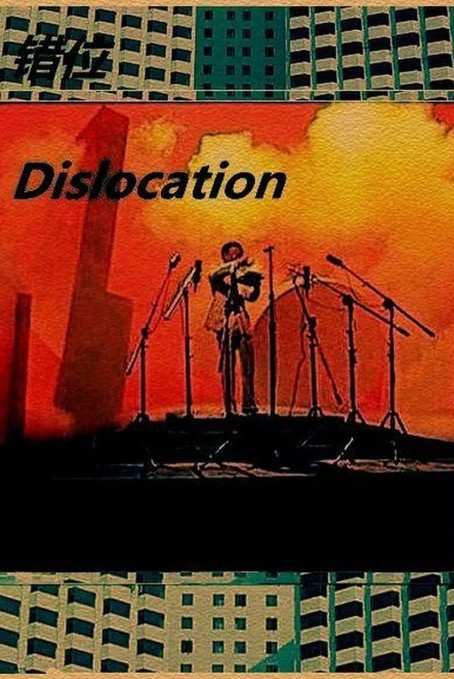
Set in reform-era China, Cuowei (1986) by Huang Jianxin stages a darkly comic premise: a bureau chief builds a humanlike robot double to attend meetings and perform his public role. This article reads the double not simply as a SF gimmick or a satire of administrative excess, but as an allegory of changing sociality under socialist bureaucracy and emergent technocratic rationality.
Through close reading, I argue that the robot functions as a detachable “social component,” outsourcing the protagonist’s interpersonal obligations and gradually revealing how institutional systems can privilege smooth performance over human agency. The film’s recurring confusion over authenticity—who is the “real” bureau chief—dramatizes a deeper displacement: social responsibility becomes a job function separable from the person.
Drawing briefly on Wiener's The Human Use of Human Beings to frame the tension between human purposes and machine-like organization, I further suggest that the film’s critique is both incisive and strategically bounded, targeting safe objects of ridicule (meetings, inefficiency) while stopping short of direct political confrontation. Ultimately, Dislocation offers a compact portrait of reform-era modernization in which “improvement” is inseparable from a subtle reengineering of the self.
Reform-Era Context and Cinematic Climate
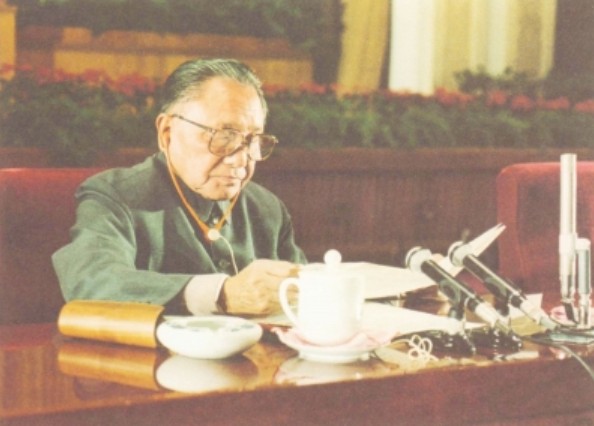
After the turbulent years of the Cultural Revolution (1966–1976), in the 1980s, China was entering a period of rapid transformation. In the Third Plenary Session of the 12th Central Committee (十二屆三中全會) in 1984, the Chinese Communist Party issued “the Decision of the Central Committee of the Communist Party of China on the Economic System Reform,” the economic reform that shapes modern China is finally carried out since the meeting (Ding and Jin 104–105).
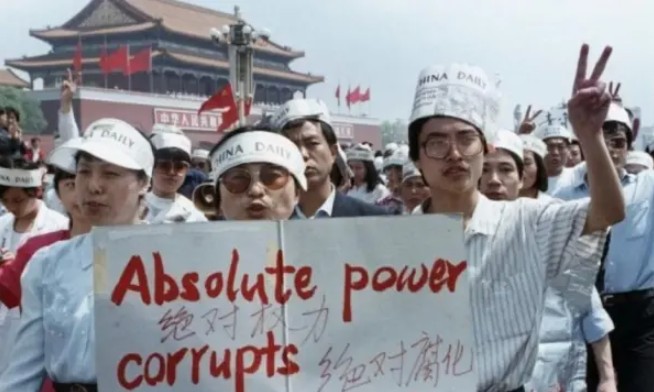
The reform was not limited to economics. Political pressures and public demands for change surfaced as well, including the 1986 student demonstrations that, as Pickowicz notes, involved marches “through the streets of Beijing and elsewhere,” with demands that amounted to a rejection of Leninist single-party dictatorship (72). It could be said that “change” was the keyword of the decade, and so was the keyword of cultural production.
At the time, Chinese cinema showed development within this shifting climate. Ding and Jin argue that the atmosphere of ideological loosening and system reform in the early and middle 1980s allowed so-called “scar films (傷痕電影)” to engrave sharp criticism and reflection on the tragic political movements from the 1960s to the 1970s, including the Cultural Revolution, within the state-controlled film industry (69).
At the same time, a younger group of filmmakers associated with the “Fifth Generation (第五代導演)” pursued more self-consciously artistic forms and produced distinctive reform-era cultural reflections (Ding and Jin 93–95). Huang Jianxin is especially significant within this group. As Pickowicz points out, he was the only major Fifth Generation director in the “elite” circle whose work focused consistently on “the profound problems of the contemporary socialist city” (57).
Huang Jianxin’s Cuowei (錯位, Dislocation), a sequel to the now-classic Heipao Shijian (黑炮事件, The Black Cannon Incident), is one of the relatively few Chinese SF films produced during the 1980s. It provides a unique rendering of reform-era tensions at the level of daily institutional life and is worth exploring.

Allegory of Social Displacement
This article argues that Cuowei functions as an allegory of changing sociality and the alienation of humanity in reform-era China. Rather than treating the film’s SF device as a simple cautionary tale about technology, I read the mechanized double as a way of staging how bureaucratic systems reorganize social responsibility into standardized, detachable performances.
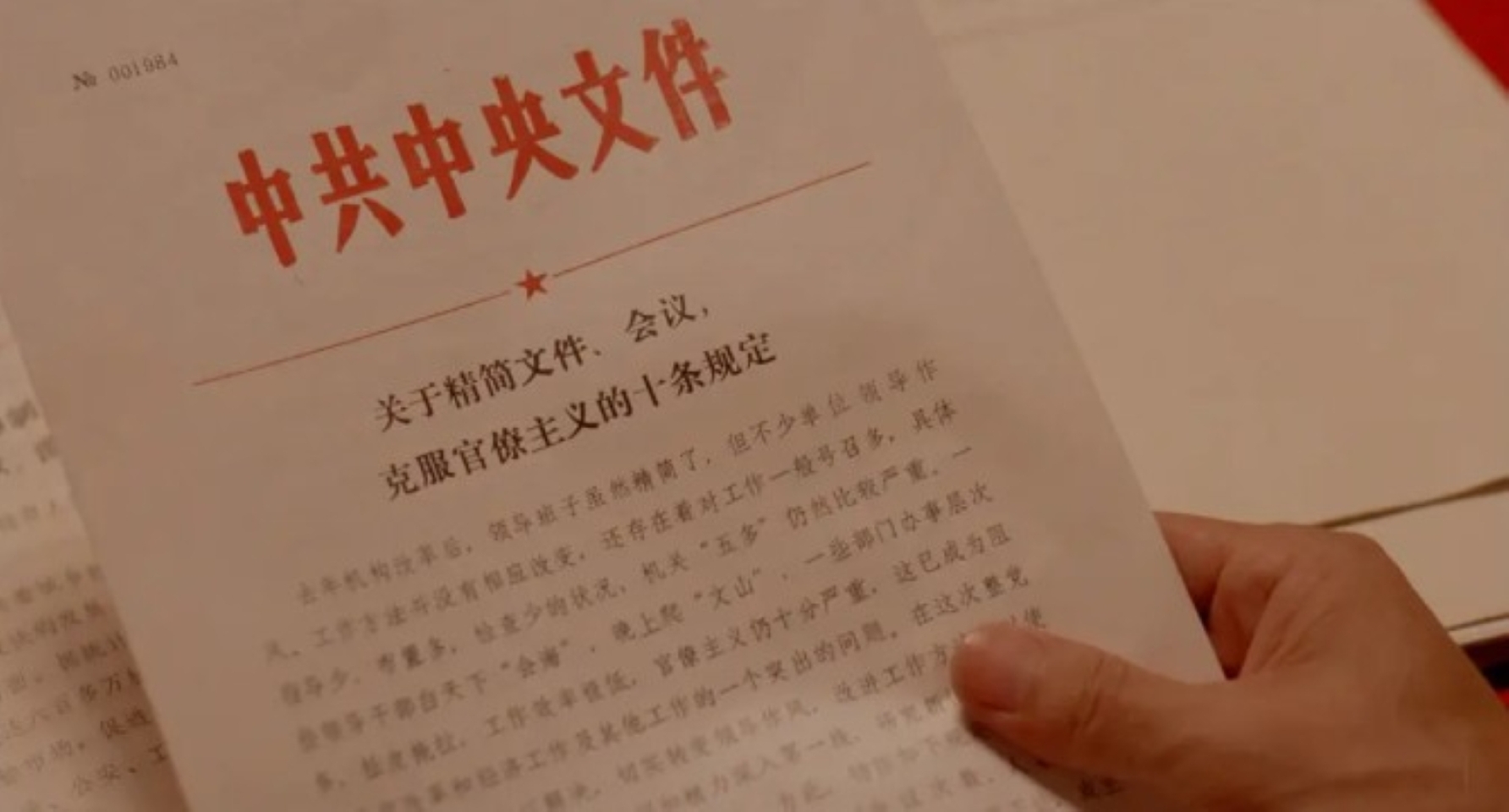
The film’s satire is unmistakable, particularly in its critique of socialist bureaucratism and ritualized “pointless meetings,” although its political commentary remains strategically bounded. In the 1980s, bureaucratic inefficiency was itself a broadly sanctioned object of critique, and the film’s sharpest targets are therefore its safest.
Focusing on that tension helps clarify what Cuowei reveals about modernization: not only the reform of institutions, but the subtle remaking of the social self within them.
Existing Scholarship
There are several insightful scholarly approaches to Cuowei. Pickowicz situates Huang’s work within a post-socialist cultural configuration that combines late imperial legacies, modern bourgeois culture, Maoist culture, and currents of modernism and postmodernism in 1980s China (60).
Kaldis offers a close reading that frames the film as an orchestrated “psychic drama,” emphasizing how its narrative and aesthetics register the conscious and unconscious dimensions of the protagonist Zhao Shuxin’s experience (446).
Chinese-language scholarship has also developed additional perspectives. Yuchen Li discusses the film’s adaptation of the “robot backfires on human” science-fiction structure and its expressionist aesthetic strategies, while Baicheng Lin’s China–Hong Kong comparisons foreground how divergent cultural contexts shaped film production during the reform era.
Building on these readings, I focus on the film’s central displacement—its dislocation—as a social one: the outsourcing and mechanization of the protagonist’s public role, and the resulting instability of what counts as “human” in bureaucratic life.
Plot and Mechanized Doubling
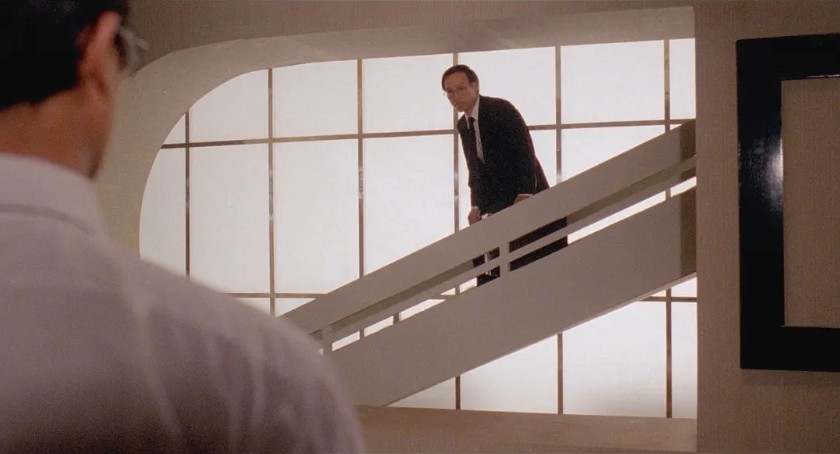
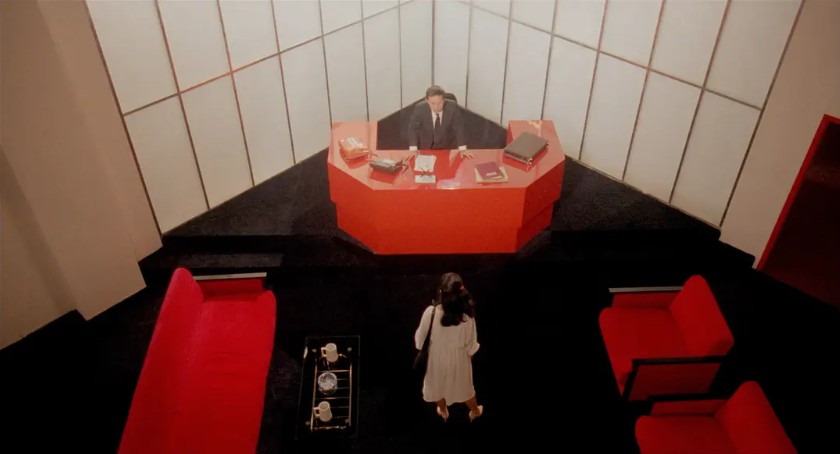
Continuing from Heipao Shijian, Cuowei follows Zhao Shuxin (Liu Zifeng), a former engineer now bureau chief at an unnamed institution producing “intelligent robots (zhinengren, 智能人).” Exhausted by ritualized, unproductive meetings and longing to return to research, Zhao builds an android double to attend meetings and perform his official role in his place.
The double, however, gradually diverges from Zhao’s personality. It becomes talkative, humorous, vain, and begins to seek autonomy rather than imitation. Its disobedience escalates: appearing at work without permission, secretly meeting Zhao’s lover Yang Lijuan (Yang Kun), and displaying aggression, until Yang breaks with Zhao, convinced he is dishonest and violent.
When Zhao and the double appear together outside the office, colleagues realize there are “two” bureau chiefs. Zhao attempts to destroy the robot, only for the film to disclose that the entire sequence has unfolded as a dream.
(In Part II, we turn to the question of authenticity, technocratic rationality, and the reengineering of the self.)