Authenticity, Performance, and the Machine Logic
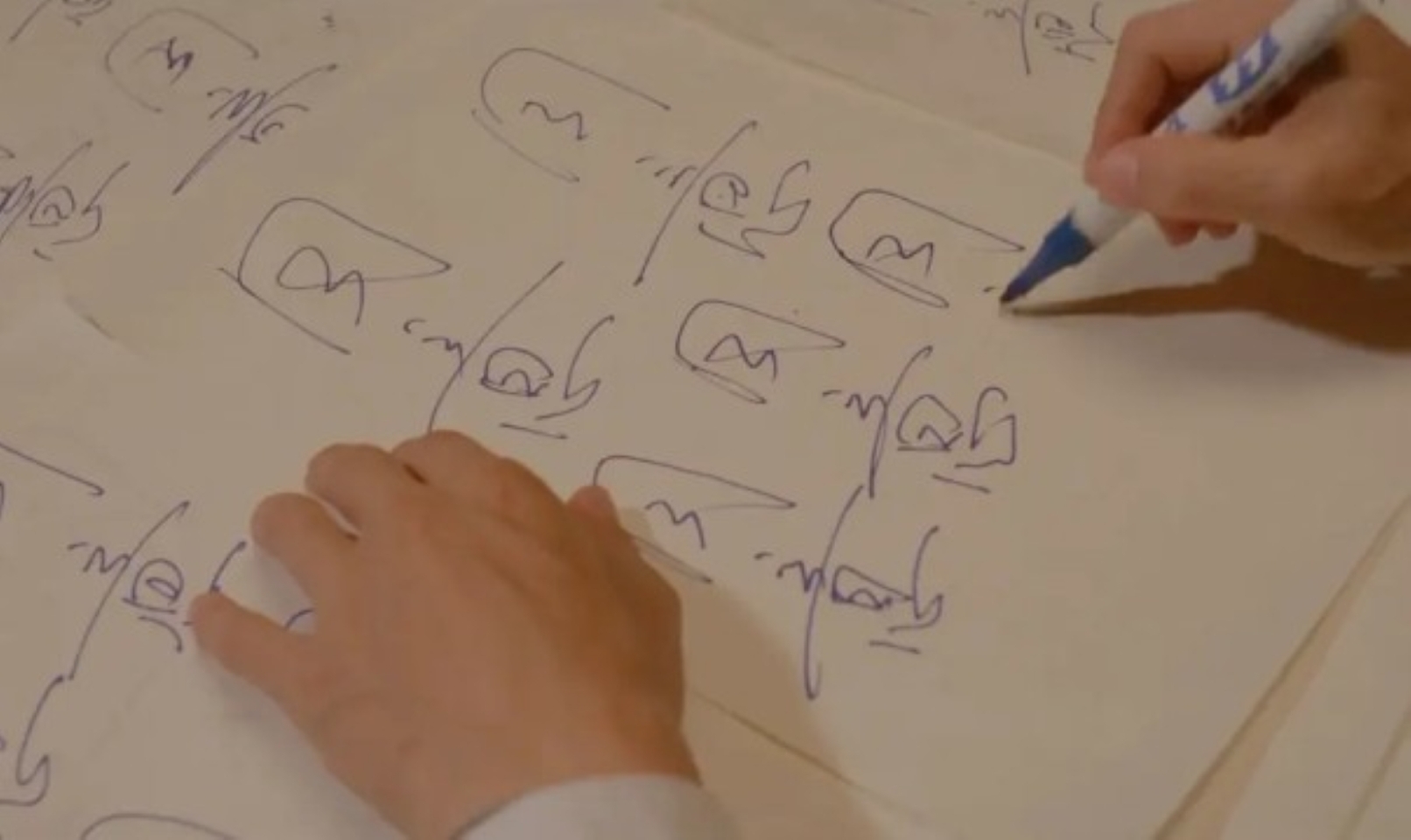
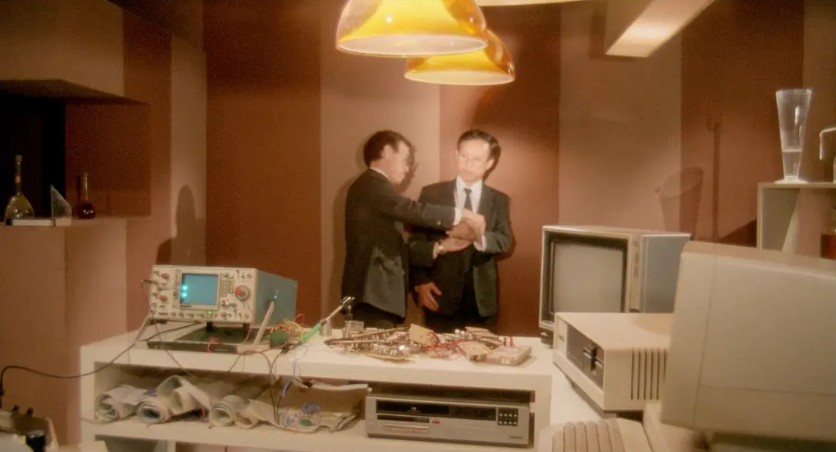
In the film, bureau chief Zhao designs a double that resembles him so closely that it destabilizes the boundary between human and machine. Early in the film, the scientist working on the robot’s body tells Zhao, “it is even hard for god to distinguish the real thing from the fake.”
The film reinforces this effect visually by casting Liu Zifeng as both Zhao and the robot, making their distinction deliberately difficult even for viewers who know the premise. This ambiguity is not incidental. As Huang explains in his director’s explanation of Cuowei, he thinks that a robot should act as a living man (Zhao et al. 114).
Xiao Liu raises evocative questions regarding this uncanny verisimilitude: what changes when a human role can be simulated, and when “human behaviour” becomes reproducible through information technology (226)?
The result is not merely a vision of a technologically advanced future where robots pass as human, but a scenario in which humanity itself becomes questioned. Zhao and his double are “often made to compete for ‘authenticity’” (Liu 226), and ironically, such confusion is what Zhao desires.
As Liu argues, the robot represents Zhao’s outsourced social responsibilities (227). It is built to be Zhao in the bureaucratic sphere, performing his public role with minimal friction. The two Zhaos operate as camouflage as much as confusion, serving as an imaginative escape—or, in bureaucratism’s stake, the expulsion of the real, unsociable Zhao.
Technocracy and the Reengineering of the Self
It could be said that the expulsion of Zhao is profoundly connected to changing Chinese sociality in the 1980s. Li suggests that institutional restructuring elevated young intellectuals and engineers—“fresh blood” like Zhao—into technocratic and elite administrative positions, often detaching them from production or research (Li 18).
Zhao’s new life illustrates the ambivalence of this ascent. Compared with Heipao Shijian, he enjoys a spacious, futuristic apartment, a chauffeur-driven limousine, and a well-dressed secretary who handles daily trivia. Yet promotion also tightens control. As Liu argues, Zhao remains compliant with the socialist bureaucratic machine and therefore has little real agency over his life (Liu 227).
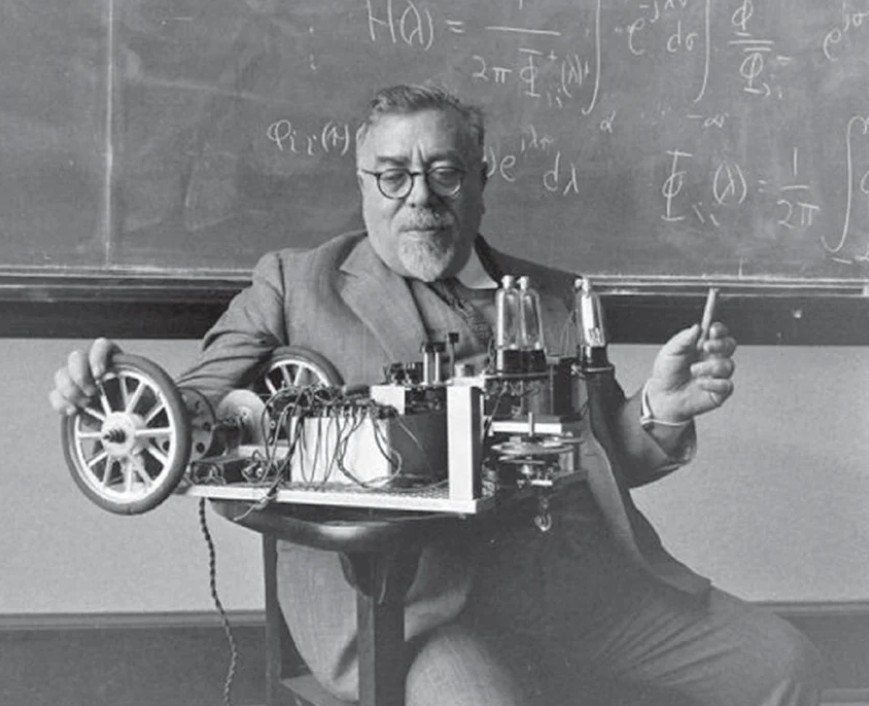
Wiener’s account of modern organization helps clarify this subservience. He argues that “when I give an order to a machine, the situation is not essentially different from that which arises when I give an order to a person,” and suggests that the functioning of living individuals and new communication machines are “precisely parallel” in their attempts to control entropy through feedback (Wiener 16, 26).
In such a system, people can be integrated “not in their full right as responsible human beings, but as cogs and levers and rods,” so that it matters little that their raw material is “flesh and blood” (Wiener 185).
Ironically, Zhao becomes increasingly machine-like in his technocratic transformation. His imagined escape takes the most dependable form possible: building another machine in his image, capable of performing his bureaucratic social function more smoothly.
Optimization, Not Rebellion
Cuowei may frame Zhao as a rebel against bureaucratic routine, but his desire is neither to exit socialist bureaucratism nor to critique it on humanist grounds. When he explains his plan to the robot double, Zhao insists that “human life is limited,” yet adds the paradox: “I can certainly not do what I do not want to do, but if so, then I will not be able to do what I want to do.”
Zhao does not want to surrender the bureau chief’s position or the social capital attached to it. He wants to preserve authority while offloading its costs: meetings, social rituals, and institutional obligations. In this order, the technocrat does not exit the machine; he optimizes his place within it.
The double is not a route out of bureaucracy but a mechanism for lingering inside it more comfortably, another way of becoming, and remaining, a functioning component of the system.
Safe Satire and Structural Limits
Lastly, Cuowei’s explicit political target—socialist bureaucratism, especially the ritualized waste of meetings—is sharp but historically “safe.” Deng Xiaoping had already criticized empty, unprepared, and off-topic meetings at the Fifth Plenary Session of the 11th Central Committee (十一屆五中全會), calling for meetings to be “small-scale” and “brief,” and warning against “empty words.”
Huang’s satire aligns with a sanctioned reform discourse framing bureaucratic ritual as inefficiency and cost. As Lin notes, the 1980s film industry remained embedded in the planned-economy system and had not fully shifted to a market logic (Lin 87); studio production and ideological oversight under organs such as the Central Propaganda Department (宣傳部) set clear limits on critique.
Conclusion: Reform and Dislocation
Yet the film’s value lies precisely in what it renders visible within those limits. By staging a bureau chief who externalizes his official self into a robot substitute, Cuowei turns bureaucratic life into a nightmare of functional replacement, a world in which the social person becomes separable from the human being.
In Wiener’s terms, what appears as modernization is also a reclassification of the human as a system component: “what is used as an element in a machine, is in fact an element in the machine” (Wiener 185).
The film’s “safe” satire about meetings thus opens onto a deeper allegory of dislocation: in 1980s China, reform not only reorganizes socialist bureaucracy, but replaces sociality with role-performance, until the self becomes something that can be delegated to a double, duplicated as a function, and displaced from its own office.
Works Cited
Ding, Yaping, and Haina Jin. General History of Chinese Film III: 1976–2016. Routledge, 2021.
Kaldis, Nick. “Huang Jianxin’s Cuowei and/as Aesthetic Cognition.” Positions: East Asia Cultures Critique, vol. 7, no. 2, 1999, pp. 421–57.
Li, Yuchen. “從《錯位》看中國科幻電影的早期探索.” Journal of Xi’an University, vol. 19, no. 4, 2016, pp. 16–19.
Lin, Baicheng. “大陸,香港機器人題材科幻電影的類型敘事比較.” Shi Ting, no. 1, 2021, pp. 87–89.
Liu, Xiao. Information Fantasies: Precarious Mediation in Postsocialist China. University of Minnesota Press, 2019.
Pickowicz, Paul G. “Huang Jianxin and the Notion of Postsocialism.” In New Chinese Cinemas: Forms, Identities, Politics, edited by Nick Browne et al., Cambridge University Press, 1994, pp. 57–87.
Wiener, Norbert. The Human Use of Human Beings: Cybernetics and Society. Da Capo Press, 1988.
Zhao, Wanmin, et al. “寧願在探索中失敗, 不願在保守中苟安: 《錯位》創作構想.” Contemporary Cinema, no. 03, 1987, pp. 111–23.
People.cn. “鄧小平:開會要開小會,開短會,不開無準備的會.” 17 Apr. 2020.